
Linn County Court Records After Arrest
After a Linn County jail arrest, the first public sign may be the current inmate roster. That roster can show a booking time, bond amount, mugshot, and hold reasons. The court record begins in a different place. Formal case activity appears through the Kansas district court system after the prosecutor files or pursues charges. The official local prosecutor is the Linn County Attorney's Office, led by County Attorney Justin Meeks. The office is in the Justice Center at 308 Main St., Suite 101, Mound City, KS 66056, and the phone number is 913-795-2230.
The jail roster and court records after an arrest may not match line for line. A roster hold reason can list an arrest charge, a warrant charge, a parole hold, a probation violation, or another agency hold. A later court record may show a complaint with fewer charges, amended charges, dismissed counts, or a diversion path. For the custody and booking side, use Linn County jail inmate records. For booking photos, use the Linn County jail mugshots page. Court records after a jail arrest are the source for filed charges and case events.
The Kansas CaseSearch portal is the statewide public portal for district court case lookup. The official CaseSearch screen below is the best starting point once a name, case number, or booking detail is known from the jail record.
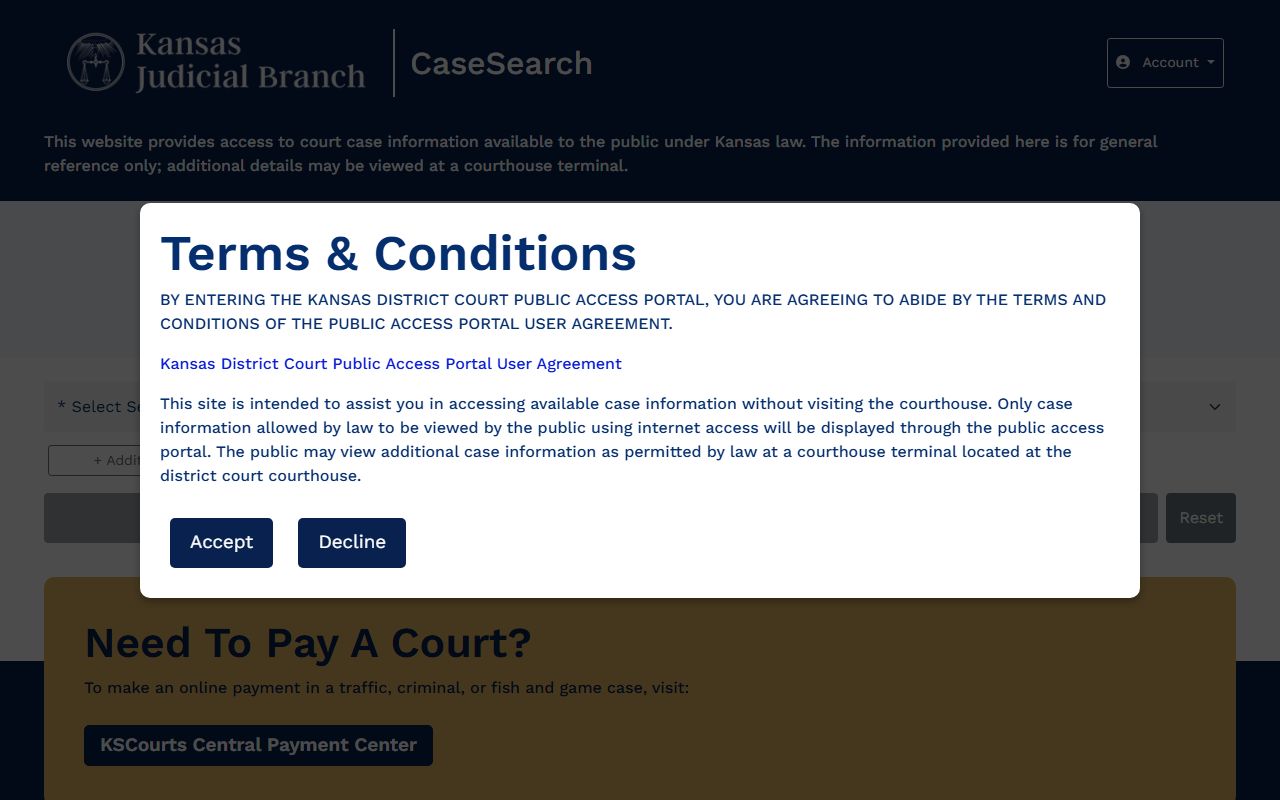
CaseSearch should be checked against the roster because a jail hold reason is not a conviction and may not be the final charge filed in district court.
Find Linn County Arrest Court Records
Kansas courts publish an official smart-search guide for the public portal. The guide lists several ways to search court records after an arrest. A person can start with a name, use a known case number, or add party criteria such as date of birth, FBI number, SO number, or booking number when those details are available. The Linn County roster may also include case or warrant numbers inside the hold-reasons field. Those numbers can help separate one defendant from another person with a similar name.
- Check the Linn County roster first for the defendant's name, booking date, hold reasons, and any case or warrant number.
- Open Kansas CaseSearch and search by name when no case number is known.
- Search by case number when the roster lists a court number in the hold reason.
- Confirm the county, case type, defendant name, and charge list before relying on the result.
- Read the docket entries for hearing dates, warrant activity, bond orders, diversion entries, amendments, and disposition.
Public electronic access is governed by Kansas Supreme Court Rule 22. Older, sealed, expunged, juvenile, or otherwise limited records may not appear in the same way as an open criminal case. When a record does not appear online, the Linn County District Court clerk is the local court-record channel.
| Field Label | Type | Required | Notes |
|---|---|---|---|
| Record / Case Number | Text | One search basis required | Use when a roster hold reason lists a case number. |
| Name | Text | One search basis required | Search by party or defendant name. |
| Business Name | Text | Optional search basis | Used for entity parties, not most jail arrests. |
| Citation | Text | Optional search basis | Useful when a citation number is known. |
| Date of Birth From / To | Date | Optional | Additional party criteria in smart search. |
| FBI / SO / Booking Number | Text | Optional | Use only when a reliable number is available. |
Linn County District Court Records
Local criminal court records after a Linn County arrest are handled through Linn County District Court in the 6th Judicial District. The Kansas Judicial Branch lists the court at the Linn County Justice Center, 308 Main Street, Suite 105, Mound City, KS 66056. That suite differs from the Sheriff's Office and jail address in Suite 103 and the County Attorney's Office in Suite 101, even though all three are tied to the same Justice Center block.
The Kansas Judicial Branch Linn County courthouse page is the official court location source for local district court records after arrest.
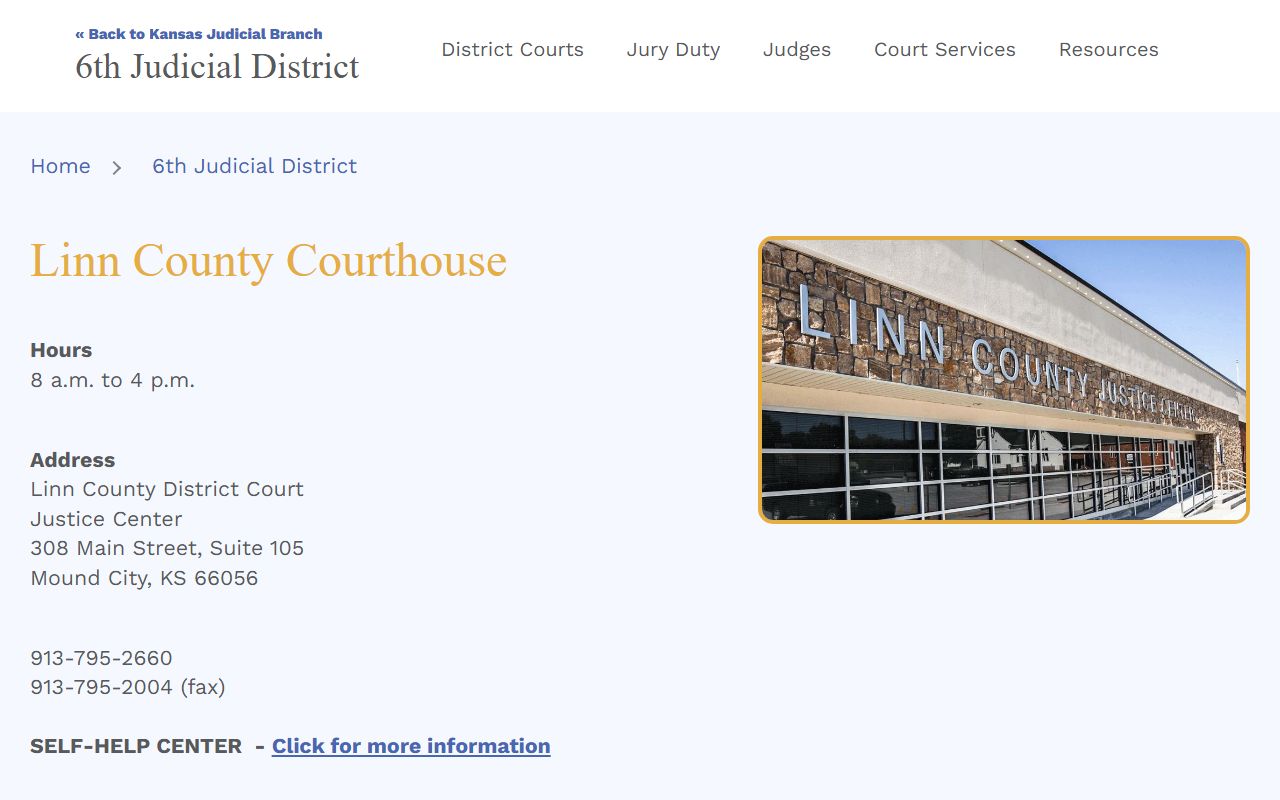
Use the court clerk for district court file access, hearing information, and records that are not fully available through the public portal.
Linn County District Court
308 Main Street, Suite 105
Mound City, KS 66056
District court records and hearings
Linn County Attorney's Office
308 Main St., Suite 101
Mound City, KS 66056
913-795-2230
Monday-Friday, 8 a.m.-4 p.m.
Linn County Arrest Charging Records
Once a Linn County arrest moves from booking to court, the key record is the charging document. The research materials distinguish a complaint, an information, and an indictment. A complaint is a common starting document in a criminal case. An information is a formal prosecutor-filed charging document in many felony cases. An indictment is returned by a grand jury and is less common for routine county cases. These court records after arrest should be read as allegations unless and until a plea, verdict, or other disposition changes their status.
| Document | Who Files It | Practical Meaning |
|---|---|---|
| Complaint | Prosecutor or law enforcement through court process | Often begins the criminal case after arrest or investigation. |
| Information | Prosecutor | Formal charge document used in many felony cases. |
| Indictment | Grand jury | Grand-jury charge, less common for routine county filings. |
The County Attorney page is also the official source for the local prosecutor contact, and its Adult Diversion Program page describes a prosecutor-administered option for some eligible minor offenses.
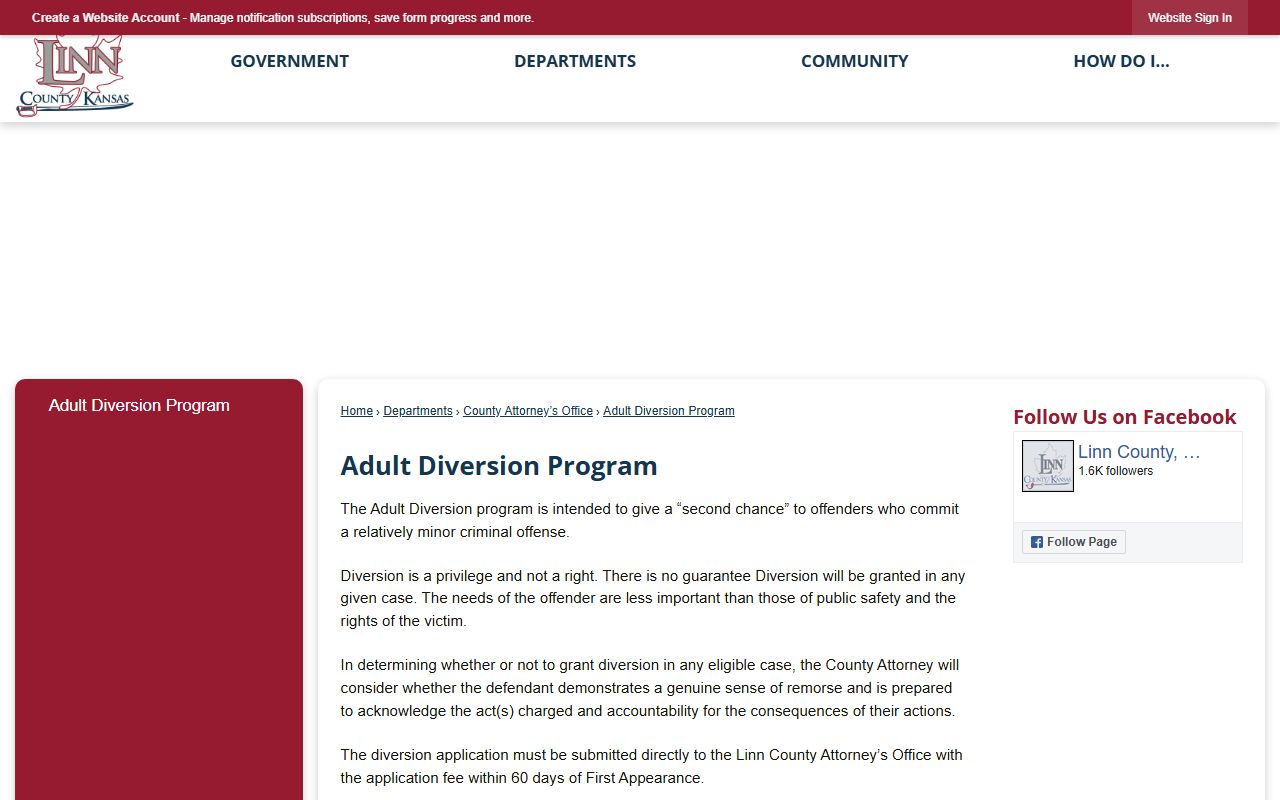
Diversion is not a guarantee. It is a court and prosecutor pathway that can affect how a charge appears and whether it ends in a conviction.
Linn County Charge Status Records
Charge status is the part of the court record that explains what happened after filing. A charge may remain pending, be amended, be reduced to a different offense, be dismissed, lead to conviction, or move through diversion. This matters because a jail arrest record can stay tied to the booking event while the court record changes through formal filings. A person may also have several counts with different outcomes in the same case.
| Status | What It Means |
|---|---|
| Pending | The charge remains unresolved in court. |
| Amended | The filed charge was changed by later court filing. |
| Reduced | The charge was lowered to a different offense or severity level. |
| Dismissed | The charge ended without conviction on that count. |
| Convicted | The court entered a guilty, no-contest, or conviction result. |
| Diversion | A prosecutor-approved agreement may avoid conviction if completed. |
Linn County Arrest Bond Records
Bond information can appear in more than one place. The Linn County roster has a Bond Amount field, but it does not define the bond type or explain whether a zero-dollar amount means no bond, sentenced status, another hold, or a different custody reason. Court records may show bond orders, release conditions, first appearance events, or later changes. For current release instructions, call the Linn County Sheriff's Office or jail at 913-795-2665.
Linn County publishes an official Approved Bonding Companies list. It includes company names, agents, phone numbers, addresses, and total bond limits. That list supports surety bond research, but a court or jail contact should confirm the current bond status before payment.
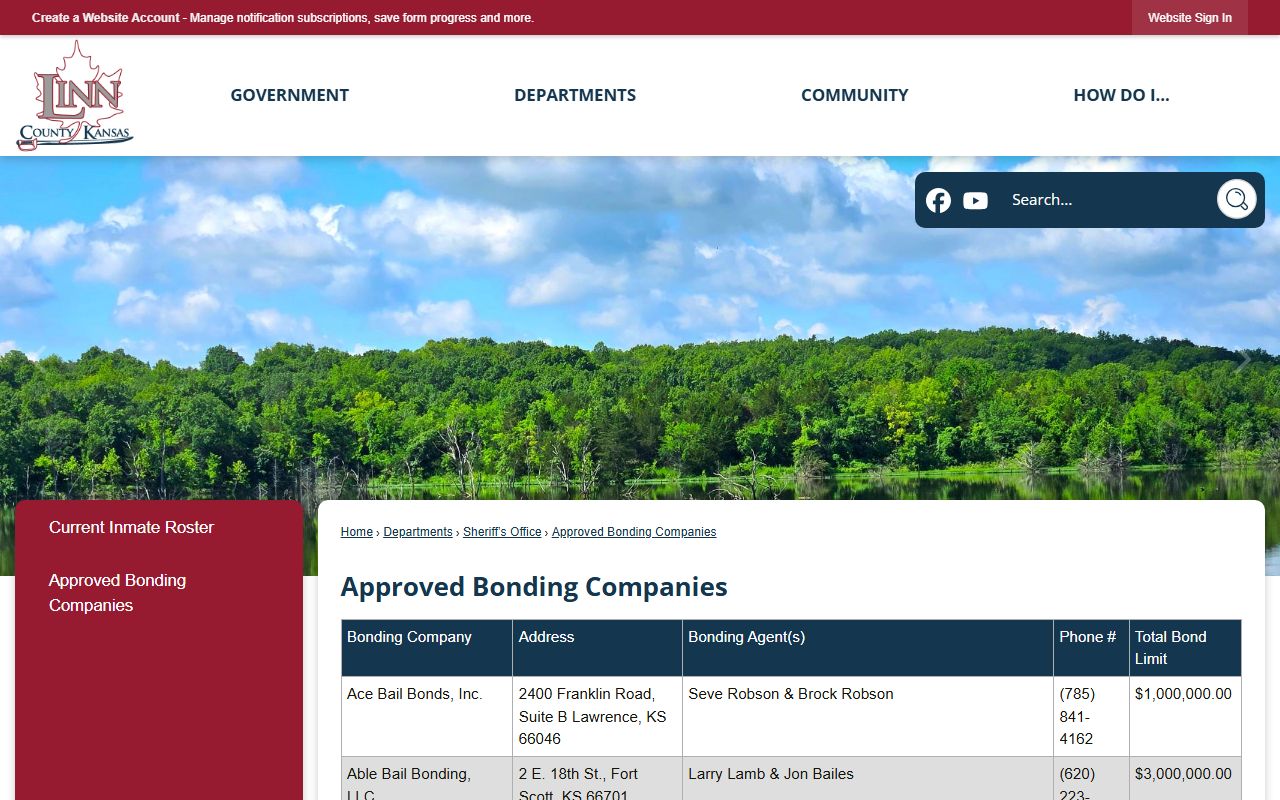
Warrants, parole violations, probation violations, or other-agency holds can prevent release even when a bond amount appears on the roster.
| Bond or Hold Type | How It Affects Release |
|---|---|
| Cash bond | Money may be paid directly if the court or jail permits that bond type. |
| Surety bond | An approved bonding company posts bond under court and jail rules. |
| Own recognizance | Release is based on a court order and promise to appear. |
| No-bond hold | Payment alone does not release the person. |
| Other-agency hold | Another jurisdiction or agency may control the next custody step. |
Linn County Warrant Court Records
No separate official Linn County warrant-search page was located in the county materials. The roster, however, often gives warrant detail for people already booked into custody. Hold Reasons can include the words Warrant Charge, Bench warrant, Arrest warrant, case or warrant numbers, statute numbers, and plain-language charge descriptions. Those entries are useful leads for court records after a jail arrest, but they are not a substitute for the court docket.
- Arrest warrant
- A judge-authorized command to arrest a person.
- Bench warrant
- A warrant issued by a judge, often for failure to appear or probation violation.
- Detainer
- A hold request from another agency or jurisdiction.
- Probation or parole violation
- A custody basis tied to supervision, not just a new arrest charge.
For bench warrants tied to district court cases, use CaseSearch and the Linn County District Court clerk. For custody questions after a warrant arrest, use the Sheriff's Office or jail. For records not visible online, a Kansas Open Records Act request may be needed.
Charges, Convictions, and Expungement
A charge is not the same thing as a conviction. Court records after a Linn County arrest may show allegations for a time even if the case later changes. Kansas.gov criminal-history checks include adult conviction information, certain recent arrests without disposition, active diversions, and KDOC confinements. They do not provide every disposed non-conviction arrest, completed diversion, expunged record, old arrest without disposition, or juvenile offender record to the public.
| Record Type | Meaning | Where It Appears |
|---|---|---|
| Charge | An accusation filed or listed in a case. | CaseSearch, court file, and sometimes roster hold reasons. |
| Conviction | A court result after plea, verdict, or other conviction entry. | Court record and eligible criminal-history checks. |
| Diversion | A prosecutor-managed agreement for eligible cases. | Court or prosecutor records while active. |
Kansas expungement statutes include K.S.A. 21-6614 for conviction, arrest, and diversion expungement and K.S.A. 22-2410 for certain arrest-record expungement. Expungement does not mean a private person can ignore a court order or assume every public copy vanishes at once.
| Access Limit | Plain Meaning | Linn County Search Impact |
|---|---|---|
| Sealed | Access is limited by court rule or order. | The public portal may hide or limit the record. |
| Expunged | Eligible records are restricted by a formal court process. | Public background and court searches may not show the same details. |
| Juvenile or protected record | Law limits public release. | Clerk access may be restricted or denied. |
Kansas Access to Arrest Court Records
Kansas open-records law helps explain why the roster, court record, and investigative file are treated differently. K.S.A. 45-216 states the policy of open public records unless another law provides otherwise. K.S.A. 45-217 excludes court records and jail rosters from the criminal-investigation-record definition. K.S.A. 45-218 requires agencies to act on requests as soon as possible and no later than the end of the third business day after receipt. K.S.A. 45-219 allows reasonable fees tied to actual costs.
For county records outside CaseSearch, the Linn County Clerk's Office serves as County Freedom of Information Officer and links the local KORA request form.
KORA can help with records not published online, but criminal investigation records, protected personal data, sealed cases, and juvenile records may still be withheld or redacted.